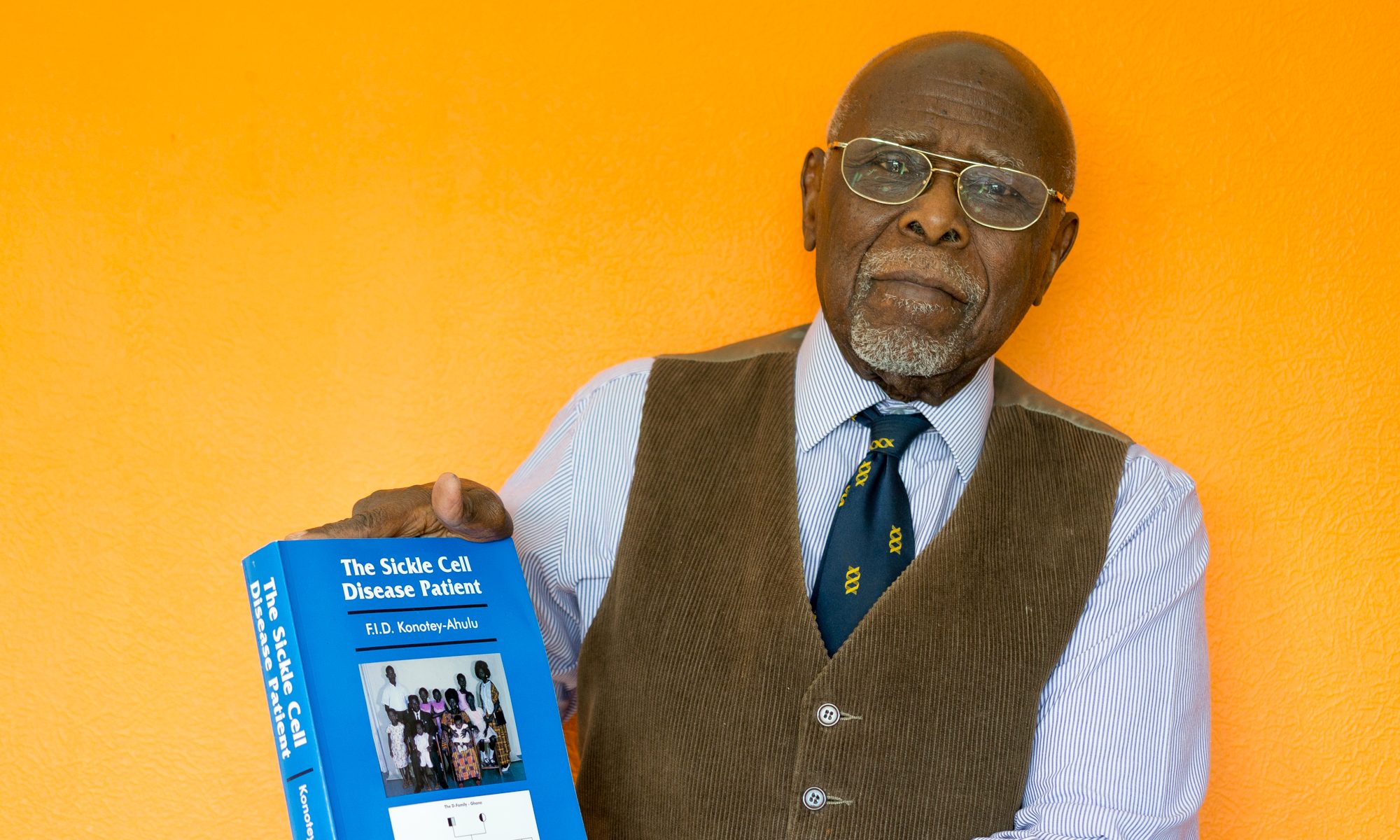
G6PD Deficiency in Ghanaians: How to recognise it

G6PD Deficiency in Ghanaians: How to recognise it  

In their instructive seminar Professors Capellini and Fiorelli put Africa first in the list of areas with the “highest frequencies of G6PD deficiency” (Jan 5, p 64) [1], so what are the Ghanaian associations?

(i) “Dorkita, I’m passing coca cola urine”. Mist alba, septrin, fansidar, chloramphenicol, APC, are the greatest offenders [2].

(ii) Typhoid disease [3 4]

(iii) lobar pneumonia with jaundice [2 4]

(iv) Renal failure [5](v) No enzyme-at-all in 5% G-6-P-D deficient males [6]

(vi) Greater delay in recovery from coma [7]

(vii) Greater representation in Cirrhosis of the liver [7]

(viii) Greater proportion of diabetics [7]

(ix) Sickle cell disease patients fare worse [8 9 10]

(x) Female homozygotes (X-X-) have more severe disease than hemizygotes (X-Y), making me wonder “how that can be reconciled with the Lyon hypothesis of inactivation of one X chromosome” [10, page 105]

(xi) Periodic intravascular haemolysis from interaction between “alpha thalassaemia type 1 equivalent to African homozygous alpha thalassaemia type 2, with G-6PD Total deficiency” [11]. Exercise acts as a trigger. The combination per se does not appear to account for the hyperbilirubinaemia in babies [All cases of ‘march haemoglobinuria’ must be screened for both alpha thalassaemia and G-6PD deficiency].

(xii) The enzyme is found in liver, brain, kidney, adrenals, skin, pancreas, nerve and muscle, hence the extra-erythrocytic manifestations of G6PD deficiency. Bedu-Addo’s description of chloroquine induced bilateral ptosis [12] could have been in one with no enzyme.

(xiii) Hepatomegaly with quick progression to cirrhosis [7]. (xiv) Viral Hepatitis is commoner in G6PD deficient patients, and characterised by intrahepatic cholestasis [13]. (xv) Terminology of A-minus (attributed to Africans) and B-minus (Mediterranean)is meaningless, as in A-minus Ghanaians “absence of enzyme in new red cells” produces cases “similar to the Mediterranean type of total deficiency” [6]

(xvi) There is an inexplicable north-south divide of incidence: 11% of males are deficient in the north [14] while 23% have G6PD deficiency in the south [15].

(xvii) Protection against malaria has not been proved in Ghana for hemizygotes and female homozygotes [7]. Indeed, blackwater fever is often related to G6PDdeficiency

(xviii) “Sabolaa  kε Emanbii yi” is a truism in my Krobo tribe: “Onions and M&B disagree” [16]. In the Colonial days some who took sulphonamides (‘M&B’) for infections fell gravely ill on eating onions. Dipropyl disulphide in onions “alters G6PD in the metabolic chain within the erythrocytes, which causes denaturing and precipitation of haemoglobin” [17].

(xix) Genetic Counselling goes beyond haemoglobinopathy to erythrocytopathy. A G6PD deficient sickle cell trait mother (AS) has two healthy daughters with her sickle cell trait (AS) husband, and they seek advice for a third pregnancy hoping to get a boy. She is told that although neither daughter has inherited her deficiency, and both avoided sickle cell anaemia (SS), her next child could be SS with G6PD deficiency (severe if a boy) [18]

(xx) Voluntary family size limitation (VFSL) [19] is the advice I give hemizygotes who (in Africa) have a high male procreative superiority index (MPSI) [20] in that males have more children than females, with consequent greater donation of abnormal genes to the next generation.

I declare that I have no conflict of interest Felix I D Konotey-Ahulu 

felix@konotey-ahulu.com

10 Harley Street, London W1G 9PF, UK

1     Capellini MD, Fiorelli G. Glucose-6-phosphate dehydrogenase deficiency. Lancet 2008; 371: 64-74.

2     Owusu SK. Glucose-6-phosphate dehydrogenase (G-6PD) deficiency in the causation of disease in Ghana. Ghana  Med J 1974; 13: 168-170.

3        Owusu SK, Foli AK, Konotey-Ahulu FID, Janosi M. Frequency of Glucose-6-phosphate dehydrogenase deficiency in typhoid fever in Ghana. Lancet 1972; 1: 320.

4    Adu D, Anim-Addo Y, Foli AK, Yeboah ED, Quartey JKM. Acute renal failure and typhoid fever. Ghana  Medical Journal 1975; 14: 172-174.

5     Owusu SK, Addy JH, Foli AK, Janosi M, Konotey-Ahulu FID, Larbi EB. Acute reversible renal failure associated with glucose-6-phosphate dehydrogenase deficiency. Lancet 1972; 1: 1255-1257

6     Owusu SK. Absence of glucose-6-phosphate dehydrogenase in red cells of an African. BMJ  1972; 4: 25-26

7   Owusu SK. Clinical manifestations of glucose-6-phosphate dehydrogenase (G-6PD) deficiency in Ghana. Ghana Med J 1978; 17: 235-39.

8   Konotey-Ahulu FID. Glucose-6-phosphate dehydrogenase deficiency and sickle cell anaemia. New Eng J Med 1972: 287: 887-888.

9   Acquaye CTA, Gbedemah KA, Konotey-Ahulu FID. Glucose-6-pogosphate dehydrogenase deficiency incidence in sickle cell disease patients in Accra. Ghana Med J 1977; 16: 4-7

10      Konotey-Ahulu FID. The sickle cell disease patient: natural history from a clinico-epidemiological study  of 1550 patients of Korle Bu Hospital Sickle Cell Clinic. London: Macmillan 1992; Watford: Tetteh- A’Domeno Co 1996.

11   Konotey-Ahulu FID. Alpha thalassaemia nomenclature and abnormal haemoglobins. Lancet 1984; 1: 1024-1025

12   Bedu-Addo G. Chloroquine induced bilateral ptosis. Trans Roy Soc Trop Med Hyg 2006; 100: 696-697.

13      Morrow RH, Smetana HF, Sai FT, Edgecomb JH. Unusual features of viral hepatitis in Accra, Ghana. Ann Intern Med 1968; 68: 1250-1264.

14   Ringelhann B, Dodu SRA, Konotey-Ahulu FID, Lehmann H. A survey for haemoglobin variants, thalassaemia and Glucose-6-phosphate ehydrogenase deficiency in northern Ghana. Ghana Med J 1968; 7: 120-124.

15      Owusu SK, Opare-Mante A. Electrophoretic characterization of glucose-6-phosphate dehydrogenase (G6PD) enzyme in Ghana.  Ghana Medical Journal 1972; 11: 304.

16   Konotey-Ahulu FID. Probing anecdotes in traditional African therapeutics. African Journal of Health  Sciences 1194; 1: 53-56.

17      Fenwick G, Hanley AB. The genus Allium – Part 3 Section X Medicinal Effects. CRC Critical Reviews in Food Science and Nutrition 1985; 23: 1-73.

18      Konotey-Ahulu FID. Missing the wood for one genetic tree? In, The First International Symposium on the Role of Recombinant DNA in Genetics. Proceedings, Chanai, Crete – Greece, May 13 -16, 1985. Eds Loukopoulos D, Teplitz R. Athens, P Paschalidis 1986, pages 105-116.

19      Konotey-Ahulu FID.  The male procreative superiority index (MPSI): its relevance to genetical counselling in Africa. In: Eds, Oliver Mayo, Carolyn Leach. Fifty Years of Human Genetics. A Festschrift and liber amicorum to celebrate the life and work of George Robert Fraser. South Australia,                 Wakefield Press, August 2007 pages 48-50.

20    Konotey-Ahulu FID. Need for ethnic experts to tackle genetic public health. Lancet 2007; 370: 1826-27.

Ethnic minorities and sickle cell disease

Ethnic minorities and sickle cell disease

SIR,-Dr John Black's article (30 March,p 984) is most helpful.
Many family doctors are quite familiar with much of what he has so
lucidly stated. The reason why many children (and adults) with sickle cell disease continue to die “before their time” in the UK and elsewhere is failure to appreciate certain facts relating to presentation, a failure of anticipation, and what I usually call a combination of circumstances.

Firstly, presentation. Epistaxis, priapism, enuresis, numbness of the lower lip, sudden aphasia, hemiplegia, blood in the urine, deep jaundice, large tummy, nails white as a sheet, loud precordial murmurs, bruit de diable at the root of the neck, unexplained fever, cough with tachypnoea, fatigability, swollen hands may each and severally be the first indication that the child has sickle cell disease.'

Alternatively, a child's condition may have nothing to do with sickle cell disease but may later be worsened by it-for example, within seven days lobar pneumonia can become pneumonia plus infarction plus pulmonary abscess.' Presentations may also differ from those described in the textbooks.

(1) Teenagers of 12, 13, 14, or 15 years with SS disease may have spleens which, far from vanishing, are enlarged.
(2) The child with genuine SS disease (parents AS, AS) with haemoglobin of 12-3 g/dl should not be treated as having sickle cell trait, because the potential for devastating in vivo sickling is there.

(3) Extreme fatigability with “nails as white as a sheet” during an attack of measles indicates an aplastic crisis from the measles virus.

Haemoglobin drops to 2-5 g/dl within 48 hours. As little as 100-150 ml of packed cells for a 5 year old child and not more than one unit for a 15 year old given over eight hours is lifesaving, even when the haemoglobin was less than 3 g/dl to start with.

Secondly, clinicians should anticipate disasters in patients with sickle cell disease. For example, if perioperative fluid therapy is not planned for a child about to undergo surgery the child will end up with a stroke. Anaesthetists are now more careful than ever so their success is virtually 100″,,, but fluid management before, during, and after operation often leaves a lot to be desired. The clinician should also be aware that the patient who has been admitted and discharged twice within the past week has come in again to die unless the whole management is overhauled.

Thirdly, there are many dangerous combinations of circumstances that may lead to disaster for the unwary.

(1) Personnel: the houseman or GP is away for the weekend; the locum has little clue about what is happening, and goes by the packed cell volume or haemoglobin concentration rather than the patient's condition; the casualty department may refuse to admit the patient, quibbling over whether the patient should go under a physician or a haematologist.

(2) Clinical: abdominal pain might be due to sickle cell crisis,2 3 or the crisis could also have been precipitated by acute appendicitis.'

(3) Genetic: hardly any west African with sickle cell anaemia is without one or more of the other hereditary erythrocytopathies: 86'U/ have concomitant lac or 2ac thalassaemia, and, although this is supposed to ameliorate the SS phenotype, 2OO, of the men and 16″(, of the women also have glucose-6-phosphate dehydrogenase (G6PD) deficiency.4 Contrary to what is claimed from the USA,G6PD deficiency on top of sickle cell disease is an added liability4 (Luzzato L, paper at International Symposium on Sickle Cell Anaemia, Abidjan, Ivory Coast, 1975).

Workers in the UK should always identify which of their patients have G6PD deficiency, because several antimicrobial agents and analgesics which are given to help may in fact harm the patient.

FELIX KONOTEY-AHULU London WIN IAA

1 Konotey-Ahulu FID. The sickle cell diseases. Clinical manifestations including the “sickle crisis.” Arch Intern Med 1974;133:611-19.

2 Hendrickse RG. Sickle cell anaemia in Nigerian children. Cent AfrJa Med 1960;6:45-57.

3 Valman HB. ABC of I to 7. London: British Medical journal, 1982:21.

4 Acquaye CTA, Gbedemah KA, Konotey-Ahulu FID. Glucose-6 phosphate dehydrogenase deficiency in sickle cell disease patients in Accra. Ghana Med 7

1977;16:15-8.

Source : British Medical Journal 1985 (20 April), Volume 290, page 1214.

Home haemodialysis just the thing for Africa’s wealthy patients

Thanks to Dr Geraint James who introduced me to his wife Professor Sheila Sherlock in the early 1960's, I became one of her research fellows on Stanley Shaldon's famous Kidney Unit at the Royal Free Hospital School of Medicine [1]. Working around the clock sometimes, Stanley Shaldon's unit was the first in Europe to introduce home haemodialysis. If, as Professor Christopher Blagg states (5 Jan) “By 1971 58.8% of patients on dialysis in the UK received dialysis at home” [2] this was mainly due to Stanley Shaldon's extraordinary drive [3].

As Ken Farrington pointed out “self supervised haemodialysis performed in the patient's home was pioneered ..largely to cope with increasing numbers” [4]. In the tropics, especially west Africa, many deaths from renal failure are an every day occurrence. Only the very wealthy can extend their lives with renal failure, for only they can afford to run generators with uninterrupted electricity in their homes. I would have liked to see some costing in Professor Blagg's editorial [2].

When Ghanaians woke to the fact that Kwame Nkrumah's “Free Health Care for everybody” was no longer an option, and the government haemodialysis centres collapsed, it became obvious that only the very wealthy could survive end stage renal failure. Not so in the UK and USA, where the poor appear to be able to benefit from expensive health care delivery programmes.

The wearable haemodialysis device recently described by Andrew Davenport and colleagues [5] would be ideal for the African situation, where ambulant patients can just switch on the system when ominous symptoms after straying from prescribed dietary requirements begin to appear [6]. But how much would the wealthy African be expected to set aside for this?

Ghana has succeeded in introducing a National Health Insurance Policy, but because of the sheer numbers involved, it is incapable of covering haemodialysis whether in hospital, at home, or on foot.

Competing interests: None

References

1 Konotey-Ahulu FID, Baillod RA, Comty CM, Heron JR, Shaldon S, Thomas PK. Effect of periodic dialysis on the peripheral neuropathy of end -stage renal failure. BMJ 1965; 2: 1212-1215.

2 Blagg CR. Haemodialysis. Wide variations in availability exist, and the UK lags behind some other countries. BMJ 2008; 336: 3-4 (Editorial 5 January)

3 Baillod RA, Comty CM, Ilahi M, Konotey-Ahulu FID, Sevitt L, Shaldon S. Overnight haemodialysis in the home. Proc Eur Dial Transplant Assoc 1966; 2: 99

4 Farrington K. Modality selection and patient outcome. In Akoh JA, Hakim N S (Eds) Dialysis Access – Current Practice, London: Imperial College Press 2001, pp 23-47.

5 Davenport A, Gura V, Ronco C, Beizai M, Ezon C, Rambad E. A wearable haemodialysis device for patients with end-stage renal failure: a pilot study. Lancet 2007; 370: 2005-2010 (Dec 15).

6 Konotey-Ahulu FID, Anderson G. Treatment of hyperkalaemic cardiac arrest by timely haemodialysis. Ghana Medical Journal 1965; 4: 158-163.

Published in the British Medical Journal on line 10 Jan 2008 http://www.bmj.com/chi/eletters/336/7634/3

Competing interests: None declared

Some thirty features of AIDS in Africa

Some thirty features of AIDS in Africa


KONOTEY-AHULU  F.I.D.*


In 1987 I visited sixteen African countries to acquaint myself with the AIDS situation on the continent. I obtained information from doctors and health workers about many of the countries I could not visit. 1 was refused a visa to go to Zaire.


A synoptic overview of clinical and other features of AIDS in Africa as I learnt on my sub-Saharan tour is here presented, making mention of some of my teachers. Those not referred to are being protected because the authorities forbade them to take any foreigner on a ward round. What I learnt from the prostitutes is to be published elsewhere.


Aids is not uniform over the 50 countries in Africa. In most it is now in the introductory phase. In 5 or 6 countries AIDS is in the propagation phase with the highest incidence in some French speaking (but not necessarily French related) regions and countries bordering them.


Age block gap. No patients were found between infancy and teens except the blood trans-fused, thus excluding insect vectors in transmission (Dr. Miriam Duggan and Dr. Sewankambo of Uganda, Professor McLarty. Tanzania; Dr. Fleming.  Zambia.)


Repatriation AIDS. In my Krobo tribe in Ghana, all patients had been sent home to die from Ivory Coast (1). Most of West Africa is like that.


100 % Female preponderance. In certain tribes in West Africa males have yet to manifest the disease (1-4).


Perineal devastation easily visible from the foot of the bed with undressed patient lying prone (Dr. Mate-Kole, Korle Bu Teaching Hospital, Ghana.)


Virgins and the nulliparous can get AIDS from the first intercourse due to tears (Dr. Mate-Kole, Korle Bu Teaching Hospital, Ghana).


Pervisemos i.e. ‘persistent virus secreting mothers’ who are asymptomatic but continue to bring forth sick children (Dr. Duggan and Dr. Hanny Friesen, Kampala ; Dr. Chintu, Lusaka).


AIDS Precipitators. Caesarian section and minor procedures like salpingohistograms can turn the asymptomatic into full blown AIDS (Dr. Duggan, Kampala.) (5).


CromwellHospital, Cromwell Road, London SW5 OTLI.

Former Director Ghana Institute of Clinical Genetics, and Consultant Physician, Korle Bu Teaching Hospital, Accra.

*Published in: Annales Universitaires des Sciences de la Santé 1987; 4 (4): 541-544.


Symptomatology of Slim : 20-40 % weight loss, persistent diarrhoea, fever, lymphadenopathy, respiratory symptoms, oral candidiasis and amenorrhoea in child bearing women, with frequent previous history of sexual exposure, of blood transfusion, and/or unsupervised injections (Dr. Sezi, Serwadda & colleagues in Kampala, physicians in Dar es Salaam, and in Lusaka and Ndola, Zambia, Dr. Neequaye et al, Ghana) (6, 7, 8).


Intractable Pruritus in adults, and in infants : this could be the commonest cause of

 insomnia (Dr. Chintu and Dr Subhash Hira, Lusaka.)


Generalised hyperpigmentation with crazy-pavement dermatopathy (Professor. Bodo, Nairobi). Papulo-vesicular eruption rather like chicken pox (Dr. Sezi, Kampala).


Dupuytren's Contracture (Professors Badoe, Archampong and Jaja's new book

“Surgery in the Tropics” p.210 shows this physical sign as a complication of plaque Kaposi's sarcoma) (9). Professor Anne Bayley (Lusaka) showed me two cases of aggresive atypical Kaposi’s sarcoma (AAKS) with this sign.


Elephantiasis of limbs (upper and/or lower) and genitals from AAKS (Professors Bugingo, Rwanda and Anne Bayley, Zambia).


Multidermatomal Herpes Zoster heralds full blown AIDS (Dr. Subhash Hira, Zambia and Dr. Sezi, Uganda).


Adult Kwashiorkor. I saw this syndrome in my Krobo tribe where girls with Repatriation AIDS whose diarrhoea must have included creatorhoea with consequent protein calorie malnutrition.


Accelerated orphan Kwashiorkor. 1 saw this at Dodowa, Ghana, in a baby boy whose mother had died a week after repatriation from Ivory Coast.


Tuberculous pericarditis as a common complication (Dr. Mboussa, Brazzaville and Dr Jahazi, Dares Salaam).


Non-AIDS Diseases producing HIVseropositivity. (Dr. Fleming and Rosemary Mwendapole, Ndola, Zambia) (10). Liver pathology can confuse results and Tanzanian physician  Professor Aaron Massawe postulates “immunoligical turbulence” with

Anti-TB treatment to fake seropositivity.


Radiological “bat's wing” lung in AAKS (Professors Bugingo Rwanda, and Anne Bayley, Zambia) (11)


Sworl Facies: a characteristic “Strikingly worried look”, on the faces of the more discerning patients I visited on ward rounds in Uganda, Rwanda, and Zambia.


Relative Paucity of full blown AIDS. It came as a surprise to find a Zairean man and wife, and a Kenyan itinerant salesman as the only AIDS patients in the 2100-bed KenyattaNationalHospital. Even in Uganda, Rwanda, and Burundi, wards were not overflowing with patients. I entirely agree with Professor Gottlieb Monekossoo, Director of the WHO's Regional Office for Africa when he is reported by The New Scientist as saying: “For many countries in Africa AIDS does not represent the same threat that it does in Europe. In the eyes of health managers AIDS probably ranks only tenth or lower on a list of serious tropical diseases. Malaria, measles, diarrhoeal illnesses, tuberculosis, cholera, meningitis, yellow fever and various cancers account for more deaths and illnesses than AIDS does, at the moment” (12).


Patients are not dying “like flies” as world media report (13). When Uganda's Dr. Sewankambo was recently asked in London what proportion of a hundred gravely ill patients for admission would be AIDS and he replied two, or at most three at the worst times”, he was glared at with incredulity.


Seropositive twin baby lives while seronegative twin dies. Born to a pervisemo (ie persistent virus secreting mother) the infected twin lived while the seronegative twin died from AIDS, in Kigali, Rwanda.


AIDS has not changed health priorities in Africa. I cannot speak for Zaire where I was not permitted to visit, but in no country has AIDS moved into the first 6 health priorities, even in Rwanda, Burundi, Zambia, and Tanzania.


Disagreement about seriousness of the problem. Some expatriate workers in Africa

prophesy doom, but most indigenous doctors while not underestimating the gravity in some countries, consider forecasts exaggerated (Uganda, Rwanda, Burundi, Zambia). I myself have judged the gravity of AIDS in Africa at 5 clinically graded levels.

Grade I, not much of a problem; Grade II, a problem exists; Grade III, a great problem;

Grade IV,  an extremely great problem, and Grade V, a catastrophe (13). I recommend     this approach to health workers and urge them to have their own grading criteria. Clinicoepidemiology rather than seroepidemiology will best bring out the truth about the real state of affairs of each country (1).


The Juliana Phenomenon. AIDS in the lake region of Tanzania, bordering Zaire, is known as “Juliana” because, as one prostitute told me,  “A few years ago when the Navy visited Mombasa with 9, 000 troops, some of our girls who travelled there for business were given T shirts with  Juliana marked on them. Many of those who wore the Juliana shirts have since had Slim and died”.


Non-Africans with AIDS. The 6 patients seen in Mombasa with AIDS (1983-1987) by a specialist, were a Zairean, and 5 non-Africans from Europe and the USA; in South Africa all the AIDS has so far occured in non-blacks (Dec 1987), and in Zaire at least 21 Europeans and Americans were known to have had AIDS (Source : Resident Greek Businessman). HIV-2 in West Africa is not specifically African, having been seen in two homosexual men in France (14) and is now known to have Portuguese connections. (15).


Complete Cure Anecdotes were heard in Uganda, Rwanda, Congo Brazzaville (related to tuberculosis) (1), Tanzania, and herbal preparations are being tried in domiciliary management of the disease in Ghana. (16).


Comment


It is important that doctors living and working in Africa adopt their own approach to a new disease like AIDS, and not import wholemeal terminologies, diagnostic criteria, and preventive slogans from abroad. Africa in my opinion should abandon the use of “homosexual”, “heterosexual”, “bisexual” etc., and should call a spade a spade. African prostitutes are said to be “heterosexual” but I met girls of whom anal intercourse was demanded by some expatriates for extra money (4), and in Burundi I recently asked a prostitute, “Y-a-t-il quelqu’un qui vous a demande de faire l`amour dans la bouche ?”

And she replied, “Oui Monsieur, mais je leur demande une grande somme d'argent”

 (17). So, one should now use “peno-vaginal sex” for so called heterosexual sex, and “anal sex”or “sodomy” for what is called “homosexual relationship”.  Anal sex has been demanded sometimes for money  in several countries in Africa. And in the first description of the AIDS problem to come from Africa one AIDS patient had a “high recto-vaginal fistula of recent onset” (6), while the Ugandan traders who were found to be seropositive admitted to, “both heterosexual and homosexual casual contacts”(6). It is far better perhaps to say that these traders admitted to both peno-vaginal and anal intercourse (4). As regards diagnosing AIDS without blood tests the Muhimbili Criteria show that one does not have to use criteria from abroad (18).


Finally the kind of research that will help Africans curtail AIDS does not have to be the vaccine orientated research of the developed countries. Public Health methods and clinical epidemiology are Africa's best tools (1).


Acknowledgements


I thank the clinicians who took me on ward rounds during my recent Africa tour, and the Health Administrators who readily agreed to see me.


REFERENCES


1. KONOTEY-AHULU F I D, (1987) Clinical epidemiology, not seroepidemiology, is the answer to Africa's AIDS problem. British Medical Journal 294: 1593

2. NEEQUAYE A.R., NEEQUAYE  J,., MINGLE J.A., OFORI-ADJEl D. (1986). Propondernace of females with AIDS in Ghana. Lancet ii: 978

3. NEEQUAYE A. R., ANKRA-BADU G.A., AFRAM R.A. (1987). Clinical features of human immunodeficiency virus (HIV) infection in Accra. Ghana Medical Journal 21: 3-6

4. KONOTEY-AHULU FID (1987) AIDS: origin, transmission and moral dilemmas. Journal of the Royal Society of Medicine 80: 720.

5 KONOTEY-AHULU FID (1987). Surgery and risk of AIDS in HIV positive patients. Lancet ii: 1146

6. SERWADDA D., MUGERWA R.D., SEWANKAMBO N.K, LWEGABA A.,

CARSWELL J. W, KIRYA G.B., BAYLEY A.C., DOWNING R.G., TEDDER R.S., CLAYDEN S.A., WEISS R.A., DALGLEISH A.G. (1985). Slim disease: a new disease in Uganda and its association with HTLV-111 infection. Lancet ii: 849

7. SEWANKAMBO N., MUGERWA R.D., GOODGANER R.,CARSWELL JW, MOODY A., LLOYD G., LUCAS S.(1987). Enteropathic AIDS in Uganda.

 An endoscopic, histological and microbiological study. AIDS 1:9

8. SEWANKAMBO N., CARSWELL J. W,. MUGERWA R.D., LLOYD G., KATAAHA P.,

 DOWNING R.G., LUCAS S.(1987) HIV Infection through normal heterosexual contact in Uganda. AIDS 1 :113

9. BADOE E.A., ARCHAMPONG  E.Q., JAJA M., Eds, Principles and Practice of Surgery in the Tropics. Accra: Ghana Publishing Co; 1986

10. FLEMING A.F., KAZI A.R., SCHEINEDER J., GUILLOT F., MWENDAPOLE R., WENDLER I., HUNTSMANN G. (1986). Comparison of HTLV-111 in some Zambian patients. AIDS Forschung (AIFO) 8: 434.

11. BAYLEY C A. (1983). Aggressive Kaposi’s sarcoma in Zambia. Lancet i: 1318-1320

12. MONEKOSO G. In Second International Conference on AIDS in Africa. Naples October 1987. Interview with Sharon Kingman. New Scientist, 15th October 1987, p 26.

13.KONOTEY-AHULU F I D. (1987). AIDS in Africa: Misinformation and Disinformation. Lancet, ii: 206-207.

14. BRUCKER G, BRUN-VEZINET F, ROSENHEIM M, REY M A, KATLAMA C, GENTILINI M. (1987). HIV-2 in two homosexual men in France. Lancet, i: 223 

15. KINGMAN SHARON. (1987). The Portuguese connection. New Scientist, 15th October, p 27

16. QUARTEY J K M, MATE-KOLE M O, OKAI GLORIA, BENTSI CECILIA, DJABANOR F F T, KONOTEY-AHULU F I D. (1988). Domicilliary management and prognosis of AIDS in the Krobo region of South east Ghana. The First International Conference on the Global Impact of AIDS. Barbicon Centre, London, 8 – 10 March.

17. KONOTEY-AHULU F I D. Extensive palatal echymosis from felllatio – a note of caution with AIDS at large. (1987). British Journal of Sexual Medicine, 14: 286-287

18. PALLANGYO K J, MBAGA I M, MUGUSI F, MBENA E, MHALU F S, BREDBERG U, BIBERFIELD G. (1987). Clinical case definition of AIDS in African adults. Lancet, ii: 972.    

First published in Annales Universitaires des Sciences de la Santé 1987; 4: 541-544


Postscript January 2008: What has happened in Africa in the past 20 years since this article was published defies logic. Countries (like South Africa, Namibia, and Malawi) that have moved from my 1987 classification of Grade I (not much of a problem) to Grade IV, tottering on V (Catastrophe) in just two decades require more high quality epidemiological research like Guisselquist and colleagues’ [Reference i] and of Didier Fassin and Helen Schneider [Ref ii] to work out very clearly the way the epidemic is being propagated. It is impossible for sex alone to account for the Financial Times (London) statement that 85% of the inhabitants of Zevenfontein in South Africa are HIV-Positive [Ref iii]. We need a paradigm shift in our approach to the management of this epidemic in Africa [Ref iv].


References  


(i)   Guisselquist D, Rothenberg R, Potterat J, Drucker E. HIV infections in sub-Saharan Africa not explained by sexual or vertical transmission. Internatrional Journal of HIV & AIDS Oct 2002: Vol 13: pages 657-666.

(ii)  Fassin D, Schneider H. The politics of AIDS in South Africa: beyond the controversies. British Medical Journal 2003; Vol 326: pages 495-497 (1 March)

(iii)  Financial Times. AIDS in South Africa. Friday, 20 September 2002, page 14.

(iv) Konotey-Ahulu FID. AIDS in South Africa: wake up call and need for paradigm shift. http://bmjjournals.com/cgi/eletters/326/7387/495#30917 April 3 2003.